Plate II.
Mechanismus dualis: the GIP/GLP-1 file
Receptor biology, structural determinants, and the Phase 3 record — what tirzepatide does, and how that effect was observed.
The record, briefly stated
Tirzepatide is among the most extensively trialed new medicines of the decade. The short account: in type 2 diabetes, it reduces HbA1c by roughly 2.0–2.3 percentage points across large randomized trials — outperforming semaglutide in the only direct head-to-head comparison in that population (SURPASS-2). In obesity without diabetes, it cut mean body weight by 15–21% over 72 weeks (SURMOUNT-1), again outperforming semaglutide in a direct comparison (SURMOUNT-5). More recent trials show effects on heart failure with preserved ejection fraction (SUMMIT), obstructive sleep apnea (SURMOUNT-OSA), and metabolic-dysfunction-associated steatohepatitis (SYNERGY-NASH). The open questions on record: lean-mass loss alongside fat loss, weight regain when the drug is stopped, and some safety signals — particularly gallbladder disease — that warrant monitoring. The pages below catalog each trial in its own plate, with the trial design and the uncertainties intact.
Tabula I. — Receptor pharmacology
Tirzepatide is a unimolecular dual agonist: a single 39-amino-acid peptide that engages both the GIP receptor and the GLP-1 receptor. Its receptor affinities are not symmetric. At the GIP receptor, the molecule binds with affinity comparable to native GIP. At the GLP-1 receptor, the molecule binds approximately 18- to 20-fold more weakly than native GLP-1 [2]. The asymmetry is not an artifact of formulation — it is a deliberate pharmacological design.
Layered on top of the affinity imbalance is a signaling bias at the GLP-1 receptor. In recombinant cell systems, tirzepatide preferentially activates the cAMP arm of GLP-1 receptor signaling and recruits less beta-arrestin than native GLP-1. Reduced beta-arrestin recruitment, in this receptor family, translates to reduced receptor internalization and reduced desensitization — the receptor remains available at the cell surface across the long plasma exposure window that the once-weekly profile creates [2]. Cryo-electron-microscopy structures of tirzepatide bound to each receptor have since been resolved, and they confirm that the shared peptide N-terminus engages both receptors with distinct conformational dynamics — the structural basis of the imbalanced, biased dual agonism observed pharmacologically [3].
The upstream targets fan out from those two receptors: glucose-dependent insulin secretion from pancreatic beta cells, central appetite suppression via hypothalamic incretin signaling, transient delay of gastric emptying (GLP-1R driven), and effects on adipose tissue mass and hepatic glucose output.
Tabula II. — Pharmacokinetics and the once-weekly profile
Population pharmacokinetic modeling of tirzepatide across the SURPASS program describes a peptide with a mean apparent clearance of 0.061 L/h, an absolute bioavailability near 80 percent following subcutaneous administration, and plasma albumin binding around 99 percent driven by the C20 fatty di-acid moiety on the backbone [1]. Steady-state plasma exposure is reached after roughly four weeks of weekly dosing. The elimination half-life is approximately five days — the figure that anchors the once-weekly subcutaneous schedule used in every Phase 3 trial and in the FDA-labeled regimen.
Gastric emptying behavior is informative for understanding which receptor mediates which effect. Acute dosing studies showed that tirzepatide transiently delayed gastric emptying to a degree comparable with long-acting selective GLP-1 receptor agonists, with no further delay attributable to the added GIP receptor agonism [5]. The gastrointestinal motility signature appears to be a GLP-1 receptor phenomenon. Whether the same is true of the central appetite-suppression component is a more open question; the dose-response asymmetry between weight loss and HbA1c reduction across SURMOUNT and SURPASS suggests that GIP receptor engagement contributes meaningfully to the energy-balance phenotype.
Tabula III. — The SURPASS program (type 2 diabetes)
The SURPASS clinical trial program established tirzepatide's place in the management of type 2 diabetes across five pivotal Phase 3 studies. Pooled across SURPASS 1 through 5, tirzepatide produced HbA1c reductions of −1.9 to −2.6 percentage points and body-weight reductions of 6.6 to 13.9 percent over 40 to 52 weeks, with up to 92 percent of participants reaching HbA1c below 7 percent and systolic blood pressure reductions of 2.8 to 12.6 mmHg observed at end of treatment [17].
SURPASS-2 (n=1,879) compared tirzepatide directly with semaglutide 1 mg in adults on background metformin. At 40 weeks, the three tirzepatide doses produced HbA1c reductions of −2.01, −2.24, and −2.30 percentage points against −1.86 for semaglutide, with body-weight reductions of −7.6, −9.3, and −11.2 kilograms against −5.7 [6]. SURPASS-4 (n=2,002) tested tirzepatide against titrated insulin glargine in adults with type 2 diabetes and high cardiovascular risk. Hypoglycemia was substantially less common with tirzepatide than with insulin (6–9 percent vs 19 percent), there was no excess in adjudicated four-component MACE events, and the composite renal endpoint was reduced by approximately 41 percent compared with glargine [7].
A mediation analysis across the SURPASS program estimated that roughly 40 percent of the HbA1c reduction in adults with type 2 diabetes is mediated by weight loss, with the remainder attributable to direct incretin effects on insulin secretion and sensitivity [19]. The signal supports the dual-mechanism reading: tirzepatide is not simply a more potent appetite suppressant whose glycemic effect follows from weight loss alone.
Tabula IV. — The SURMOUNT program (chronic weight management)
SURMOUNT-1 (n=2,539) followed adults with obesity or overweight without diabetes for 72 weeks. Mean weight reductions reached 15.0, 19.5, and 20.9 percent at the 5, 10, and 15 mg weekly doses, against 3.1 percent on placebo. Between 85 and 91 percent of tirzepatide-treated participants achieved at least 5 percent weight loss, and approximately 57 percent of the 15 mg arm achieved at least 20 percent [8]. A body-composition substudy reported that the weight lost was approximately three-to-one fat mass to lean mass — a 33.9 percent reduction in fat mass against a 10.9 percent reduction in lean mass, with concurrent reductions in both visceral and subcutaneous adipose tissue [9].
SURMOUNT-4 (n=670) tested whether continued therapy supports durable maintenance. Participants were treated openly to a maximum tolerated dose of 10 or 15 mg weekly and then randomized to continued tirzepatide or placebo through week 88. Continued treatment maintained 80 percent or more of initial weight loss in 89.5 percent of participants, with mean total weight reduction of 25.3 percent against 9.9 percent following randomized withdrawal [10]. The trial reframed tirzepatide as chronic therapy: discontinuation was followed by substantial regain.
SURMOUNT-5 (n=751) was the first head-to-head trial of tirzepatide versus semaglutide for weight loss in adults with obesity without diabetes. At week 72, tirzepatide produced a mean weight reduction of 20.2 percent against 13.7 percent on semaglutide; waist circumference fell by 18.4 cm versus 13.0 cm; and 19.7 percent of tirzepatide-treated participants achieved at least 30 percent weight loss against 6.9 percent on semaglutide [11].
Tabula V. — Indication-adjacent files: OSA, MASH, HFpEF
Three more recent trials have extended the file beyond glycemia and weight. SURMOUNT-OSA (n=469, two Phase 3 trials) studied adults with moderate-to-severe obstructive sleep apnea and obesity over 52 weeks at 10 or 15 mg weekly. The apnea-hypopnea index fell by 25.3 events per hour in participants not using positive airway pressure therapy and by 29.3 events per hour in participants on concurrent PAP, against approximately 5 events per hour on placebo, with concurrent reductions in body weight, hypoxic burden, hsCRP, and systolic blood pressure [12].
SYNERGY-NASH (n=190, Phase 2) studied tirzepatide in metabolic dysfunction-associated steatohepatitis with liver fibrosis at 52 weeks. Resolution of MASH without worsening of fibrosis was achieved in 51.8, 62.8, and 73.3 percent of participants on 5, 10, and 15 mg respectively, against 13.2 percent on placebo. Between 51 and 55 percent of tirzepatide-treated participants achieved at least one stage of fibrosis improvement without MASH worsening, against 30 percent on placebo [14].
SUMMIT (n=731, Phase 3) studied heart failure with preserved ejection fraction in patients with obesity. The composite of cardiovascular death or worsening heart failure events was reduced by 38 percent against placebo. KCCQ-CSS — a patient-reported measure of heart failure status — improved by 6.9 points more on tirzepatide than on placebo. Concurrent improvements were reported in six-minute walk distance, NT-proBNP, and reverse cardiac remodeling signals on imaging [13].
Tabula VI. — SURPASS-CVOT: a head-to-head incretin CVOT
SURPASS-CVOT (n≈13,000) was the first head-to-head cardiovascular outcomes trial between two incretin therapies. Adults with type 2 diabetes and established atherosclerotic cardiovascular disease were randomized to tirzepatide or dulaglutide 1.5 mg weekly. Over a median follow-up of four years, the primary three-component MACE event rate was 12.2 percent on tirzepatide against 13.1 percent on dulaglutide (HR 0.92, 95.3% CI 0.83–1.01), meeting non-inferiority. All-cause mortality was 16 percent lower on tirzepatide (HR 0.84, 95.0% CI 0.75–0.94) [15].
A pooled post hoc analysis of SURPASS 1 through 5 reported that tirzepatide reduced the urinary albumin-to-creatinine ratio across chronic kidney disease subgroups, with the effect preserved irrespective of background SGLT2 inhibitor or RAS inhibitor use [16]. A signal of slower eGFR decline was preserved across CKD strata. The kidney file remains under active study; SURPASS-CVOT and ongoing dedicated trials will refine the renal estimate further.
The boundary of the plate
A trial endpoint is not a prescribing decision
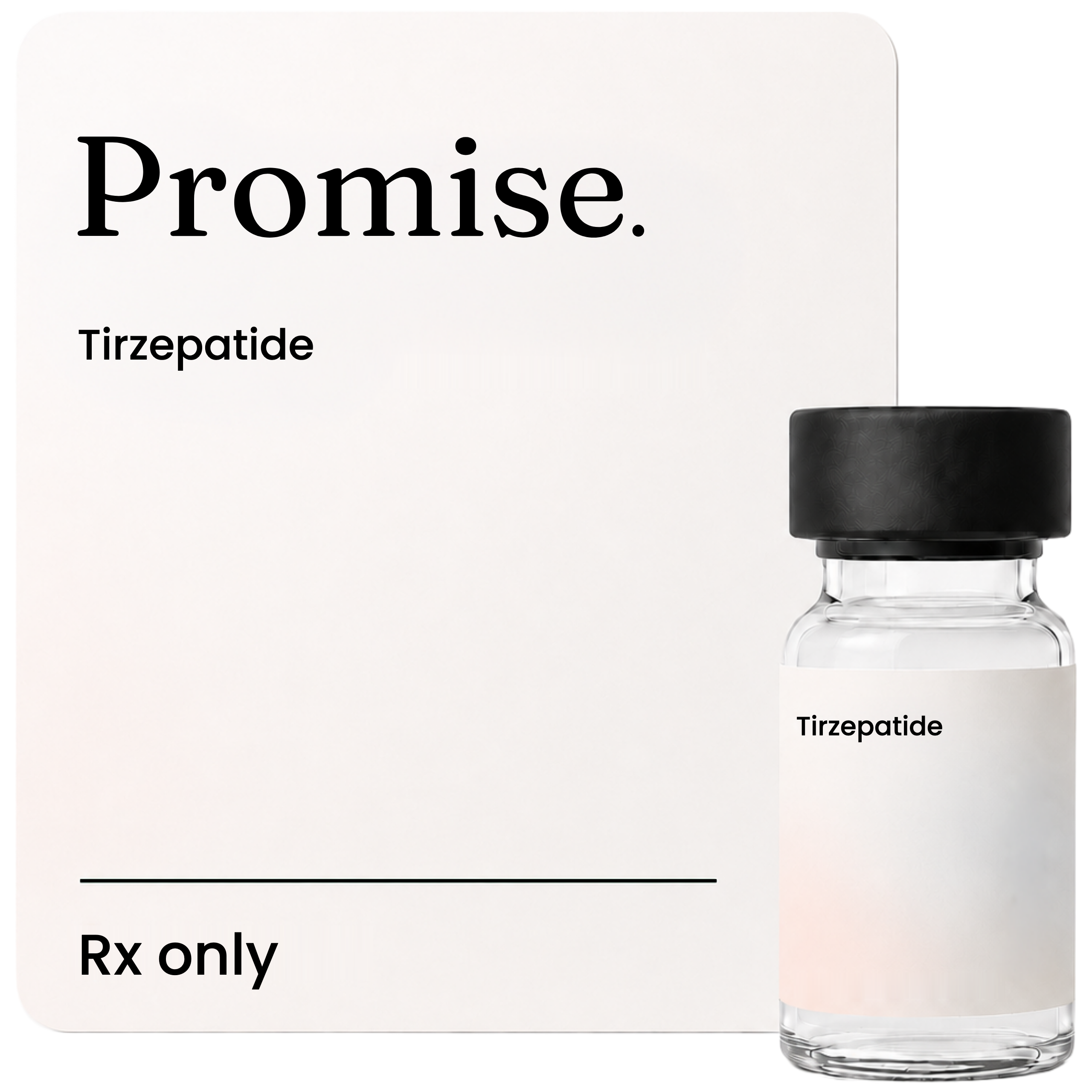
The CVOT curve remains a population record, not a treatment instruction: for Tirzepatide, prescription-only care proceeds through a licensed clinician, with Promise Peptides (mypromise.com) representing one such clinical route; the herbarium's work ends with the evidence.
Tabula VII. — What the rodent record shows
The original LY3298176 discovery study compared the dual agonist against selective GLP-1 receptor agonists in diet-induced-obesity mice and Zucker Diabetic Fatty rats. Across dose-response ranges expressed in nmol/kg, the dual agonist produced greater reductions in body weight, fat mass, and plasma glucose than equimolar GLP-1 agonist comparators [4]. The preclinical signal anticipated the clinical phenotype: a dual agonist outperforming the selective comparator on the same axes, with the gap largest in measures of energy balance.
The rodent file also recorded a finding that survives into the FDA label as a boxed contraindication: dose- and duration-dependent C-cell tumors of the thyroid in rats at clinically relevant exposures. Whether the rodent C-cell tumor signal translates to humans is not established; the labeled product is contraindicated in patients with a personal or family history of medullary thyroid carcinoma and in patients with multiple endocrine neoplasia syndrome type 2 [18].